
Recycling and Sustainability at Gardeners Cranford
As Gardeners Cranford we take a whole-site approach to an eco-friendly waste disposal area and a long-term sustainable rubbish gardening area. Our gardening team in Cranford balances practical site work with measurable sustainability goals: composting green waste on-site, diverting surplus soil and stone to reuse streams, and coordinating with local civic amenity facilities to keep materials circulating in the local economy. Our aim is to make every garden project an opportunity to reduce landfill and create healthy soil.Our sustainability commitment
We have set a public recycling percentage target of 70% reuse and recycling of all job-generated waste by 2028 across all Garden services Cranford activities. That target covers green waste, timber and wood products, metals, plastics from pots and plant containers, and clean soil where possible. We operate with low-carbon vans and logistical planning to minimise fuel use, and we offset unavoidable emissions through verified schemes while relentlessly reducing waste at the source. Long-term reduction is central to our service model. Our approach complements local boroughs' waste policies: Cranford falls within borough systems that encourage the separation of garden waste, food waste and mixed recycling, and we align our collection and sorting to make it easy for residents and clients to participate. By pre-sorting on site into clear streams we reduce contamination and improve the value and usability of recyclable materials taken to local transfer stations and civic amenity sites.
Designing an eco-friendly waste disposal area
On every project our gardeners in Cranford set up a clearly labelled, sheltered disposal area for recyclable streams: dedicated bays for green waste for composting, a dry area for timber and wood reuse, and a small container for plastics and metals. We emphasise mulching and compost reuse to keep nutrients local and reduce the need for external inputs. This sustainable rubbish gardening area is sized to the job so materials are handled efficiently and safely.We maintain practical partnerships with charities and reuse organisations so that surplus items, serviceable pots and timber offcuts find new life. Donations are vetted and sorted to ensure safety and traceability; items that cannot be reused are processed into secondary materials rather than landfilled. These partnerships are a key part of our circular approach and help community groups flourish while reducing waste burdens on borough systems.
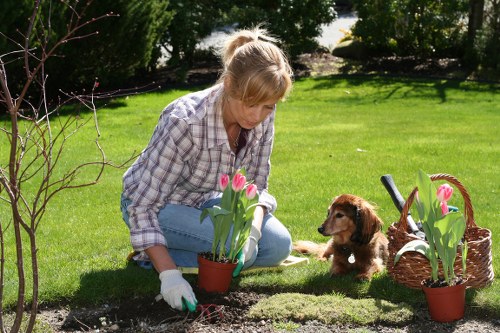 The boroughs' approach to waste separation — separate food and garden collections, clear mixed recycling streams and household waste hubs — complements our operations. Key local recycling activities we support include:
- On-site chipping of branches and subsequent reuse as mulch or fuel stock.
- Composting of green waste in managed bays and returning compost to client sites.
- Segregation and delivery of plastic pots, metal fixtures and inert materials to transfer depots.
Our fleet strategy prioritises low-carbon vans — a growing mix of electric and hybrid vehicles for local trips and high-efficiency Euro-standard diesel for heavier loads. Route optimisation software reduces miles driven and consolidates loads bound for the same local transfer stations. For larger disposals we coordinate with borough transfer depots to minimise double handling and keep transport emissions low. This combination of operational choices reduces the carbon footprint of routine garden clearances and landscaping works.
Management of bulky and specialised waste follows strict local guidelines: timber contaminated with preservatives is segregated and taken to facilities that handle wood waste appropriately; soil and rubble are analysed and reused where clean, or taken to licensed inert waste transfer stations when necessary. Our compliance-first approach means every disposal has a documented chain-of-custody that meets borough and regional standards.
We track progress with waste audits and monitor diversion rates. Our operations team conducts quarterly reviews to ensure the recycling percentage target is on track, and we publish internal reports to illustrate progress. Reuse, reduce, recycle is not just a slogan — it is embedded in procurement, tool use, and material selection for every Cranford gardeners project.
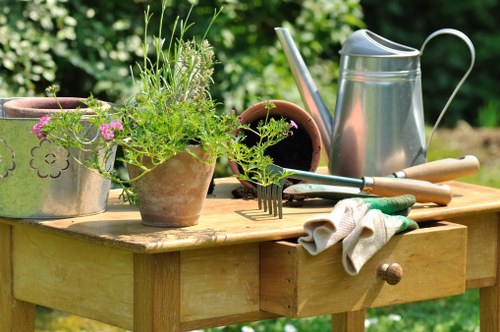 Community engagement and charity partnerships open practical channels for reuse: we arrange seasonal drive days for surplus compost and planters, coordinate material donations to local allotment associations and community gardens, and support social enterprises that recondition garden furniture and tools. These collaborations expand the capacity of our sustainable rubbish gardening area while ensuring that useful items remain in circulation.
Design choices also reduce long-term waste: permeable paving, rain capture systems and native planting reduce maintenance needs; raised beds and compost bays are designed to be repairable and modular so components can be replaced rather than discarded. Gardeners in Cranford favour materials with high recycled content and products certified for low environmental impact whenever practical.
 In summary, Gardeners Cranford is committed to measurable, local action: a 70% recycling and reuse target, partnerships with charities and local reuse organisations, regular use of borough transfer stations and civic amenity facilities, and a low-carbon van fleet to reduce transport emissions. We design, operate and evolve our eco-friendly waste disposal and sustainable rubbish gardening areas so that every landscaping job contributes to a healthier neighbourhood circular economy.

